Table Of Content
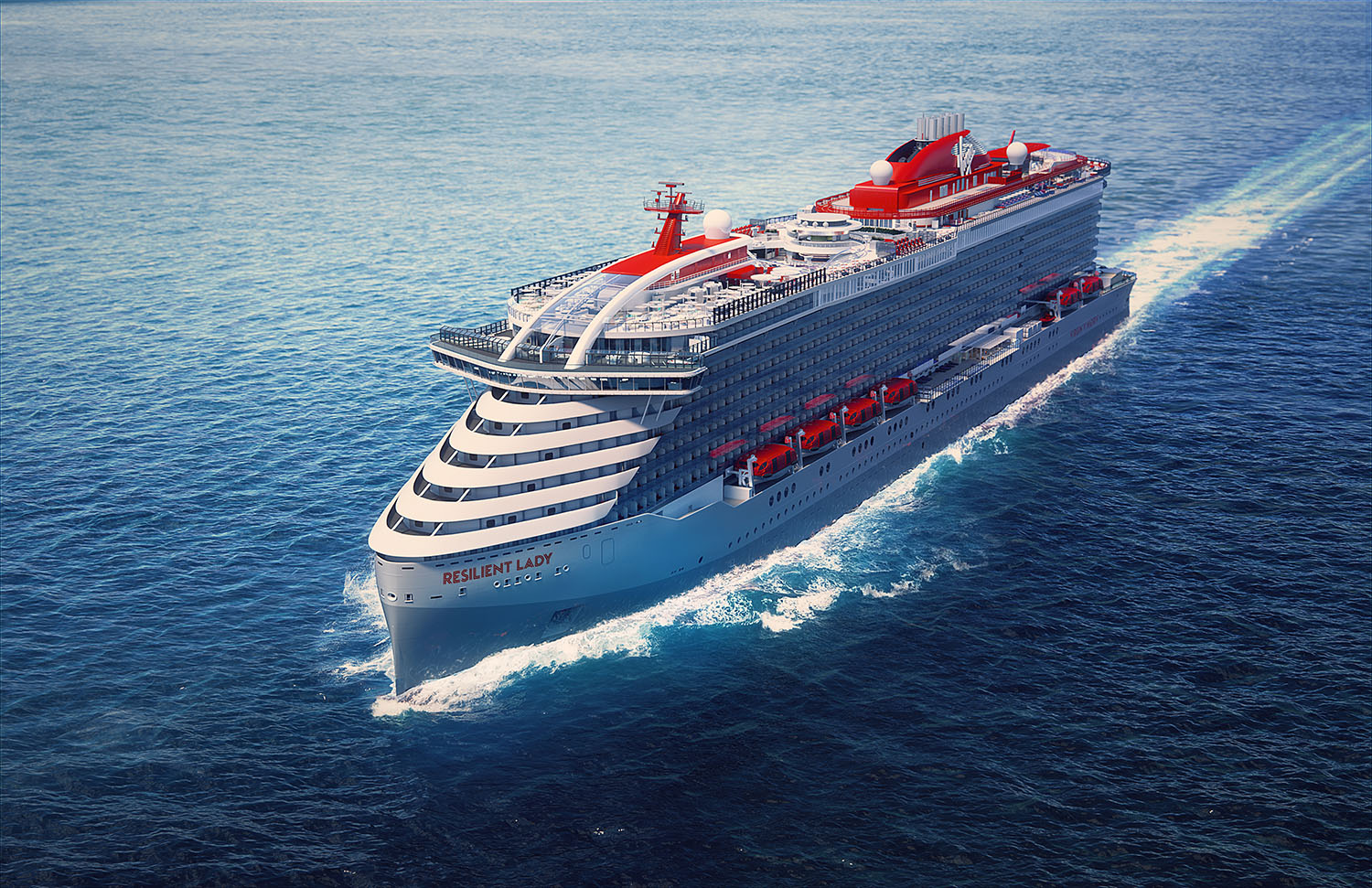
Cruise ships use various propulsion systems, such as diesel-electric engines or gas turbines, to generate power and maintain their speed. These systems are designed to be efficient and reliable, ensuring that the ship can maintain a consistent speed throughout its journey. Our article on cruise ship stability provides an in-depth look at the relationship between propulsion systems and a ship’s overall stability.
How To Convert Knots To MPH?
Starlink on cruise ships: Which lines have faster internet connections on board? - The Points Guy
Starlink on cruise ships: Which lines have faster internet connections on board?.
Posted: Sat, 23 Mar 2024 07:00:00 GMT [source]
A ship with an ocean liner has a lower center of gravity, higher lifeboats, a reinforced hull, and a pointed bow. Conversely, nautical miles, which were first defined in 1929, are based on the latitudinal degrees of the Earth; one nautical mile is equivalent to one minute of latitude. Another time a cruise ship may speed up is if the wind is working against it and inherently slowing it down.
Average Speed of Cruise Ships
However, several ships from Holland America Line, Norwegian Cruise Line and Royal Caribbean have been known to reach speeds of over 25 knots (29 mph) during sea trials. The average cruise ship cruising speed is about 20 knots per hour. A knot is a form of measurement that equals one nautical mile. A nautical mile is a bit longer than a statute, or land-measured mile. So, if a cruise ship is sailing at a speed of 21 knots, you might compare that to roughly 24 mph. In truth, a cruise ship’s speed depends on the design of the ship, the itinerary, and the weather.
How Fast is the Queen Mary II Cruise Ship?
When it comes to cruise ships as we know them, there’s no official record. One land mile is 5,280 feet, while one nautical mile is 6,076 feet. So, to convert knots or nautical miles per hour to land miles per hour, you have to add 15% to the land mile. Sea trials are part of the safety tests that cruise ships undergo before their maiden voyage. During sea trials, the ship will have to test its maximum speed. The Queen Mary II travels at 18 knots making it the second fastest cruise ship on Earth.
Juneau Takes Steps to Limit Cruise Ship Passengers

An ocean liner is defined as a ship whose main function is transportation, whereas a cruise ship is constructed for leisure. You’ve probably wondered, as you cruise across the ocean, just how quickly cruise ships go. Now, among the bona fide cruise ships, the ‘Need for Speed’ award goes to Cunard. These ships, while known for their entertainment offerings and sheer size. However, if a passenger has a medical emergency and needs to reach the nearest port, the captain may choose to take the cruise ship to top speed.
The measurement of miles on land dates back to Roman times and is based on 1,000 paces (only counting the left foot). Nautical miles were defined much later, in 1929, and are based on degrees of latitude around the earth. Any decisions to speed up or slow down are always made with everyone’s safety and comfort in mind. Meanwhile, ships that sail to Antarctica or through Alaska’s Inside Passage may need to adjust their speed if there are glaciers or icebergs in the area. Long-distance navigators (ships, aircraft, and rockets) use latitude and longitude to calculate distances on a map. They tend to have a longer, pointed bow that helps them navigate high rising ocean waves.
Advanced Navigation Systems
But fast speeds are still needed in the case of an onboard emergency, or to outrun bad weather. But "knot" isn't simply a misspelled nickname for "naut" (as in nautical mile). Its origins are far more literal, according to the United States' National Ocean Service. She has worked in the cruise industry since 2015 and has taken over 30 cruises. Now, she helps over 1 million people per month to plan their perfect cruise holidays.
How Fast Do Cruise Ships Really Go? Cruise Ship Speeds Revealed!

However, you may be surprised to learn that she’s not technically a cruise ship, she’s an ocean liner! This ship is designed to transport passengers across the Atlantic, sitting lower in the water with a pointed bow and an extra-thick hull compared to a true cruise ship. Cruise ships don’t generally go over 20-something knots for a couple of reasons. First and foremost, vessels keep a consistent cruising speed for fuel efficiency. Larger vessels may travel faster at anywhere from 21 to 24 knots. Royal Caribbean states that the average speed of their cruise ships is 18 to 20 knots.
This is especially the case when the distance to the next port is short. Beyond those Cunard ships, many contemporary cruise ships clock in right around Harmony of the Seas' top speed of around 25 knots. By most accounts, the fastest ship is/was Cunard's Queen Mary 2, with a top speed of 30 knots, or 35 mph. She was just a tad slower than sister vessel Queen Elizabeth 2, which ad a reported top speed of 32 knots. If you’ve ever marveled at the sheer size and majesty of a cruise ship, you may have found yourself wondering just how fast these floating behemoths can go. In this article, we will dive into the fascinating world of cruise ship travel and explore the question of how fast these vessels can actually go.
Faster ships can cover more distances in a shorter time, allowing them to visit more destinations within a set time frame. However, speed must be balanced with other factors, such as time spent in port, to create an attractive and feasible itinerary for passengers. For example, a faster ship could enable passengers to spend more time exploring the best Mayan ruins in Costa Maya, Mexico, providing an unforgettable experience. Additionally, it’s essential to understand the terminology used when discussing a ship’s speed. To learn more about what a knot is and how it relates to speed, check out our article explaining how fast a knot is.
For comparison, an average cruising speed of 20 knots is equivalent to traveling at 23 miles per hour on land. When it comes to the speed of cruise ships, it’s important to understand that there is a difference between the maximum speed and the average cruising speed. The average cruising speed of a cruise ship typically ranges from 19 to 23 knots, which is about 22 to 26 miles per hour. However, this is just an average and can vary depending on various factors. A modern cruise ship typically travels at a speed of about 20 knots (23 miles per hour) throughout the day and night. It’s important to note that there isn’t a significant difference in the speed of cruise ships during the day versus nighttime.
As a result, an average large cruise ship travels at cruising speeds greater than the maximum speed of a historical wooden vessel. “Cruising speed” is the speed at which most cruise ships travel on open seas. It is not the maximum speed but a rate at which the ship will offer a comfortable ride, using the least amount of fuel for the distance traveled. If a cruise ship traveled with “the pedal to the medal” it would not only give the passengers a rough sailing, but it would also use much more fuel than necessary. For instance, Royal Caribbean’s Oasis of the Seas travels at about 20.2 knots, while Norwegian Cruise Line’s Norwegian Jade can reach speeds up to 24.6 knots. However, it’s important to note that cruise ships generally prioritize passenger comfort and fuel efficiency over speed.
Cruise lines measure the speed of their ships using GPS systems. A GPS receiver measures the position of the ship every few seconds. From this information, the computer calculates the ship’s velocity. If the ship has been stationary for more than five minutes, its speed is calculated from the last known location. Otherwise, the computer uses data collected during previous trips to estimate the ship’s current speed.




No comments:
Post a Comment